

I’m not a big poster on X, but I read my X timeline more than I’d like to, and I think it sometimes influences how I think about or see certain topics.
There’s nothing wrong really, with reading other people’s opinions to help form your own, but X is a loud place for a few voices, so it can be very biased.
One example I’m seeing lately is the spread of posts about EU stagnation, overregulation, and zero innovation. And true, Europe is imposing a lot of hurdles for founders, which I’m gonna go through in this article.
This isn’t a “Europe cannot innovate” article; it’s more about the struggles I personally faced starting and running a company in Germany. Many of those same difficulties apply across Europe, though some countries do better than others. I’ll also highlight areas where Europe is doing great work, and why both extremes of the spectrum aren’t good.
Let’s start with the first complication.
Company formation
I started my first company in Germany back in 2020, but the process remains the same. In other countries, to form a company, you need an idea, some capital, and to complete an online form. That wasn’t the case in Germany.
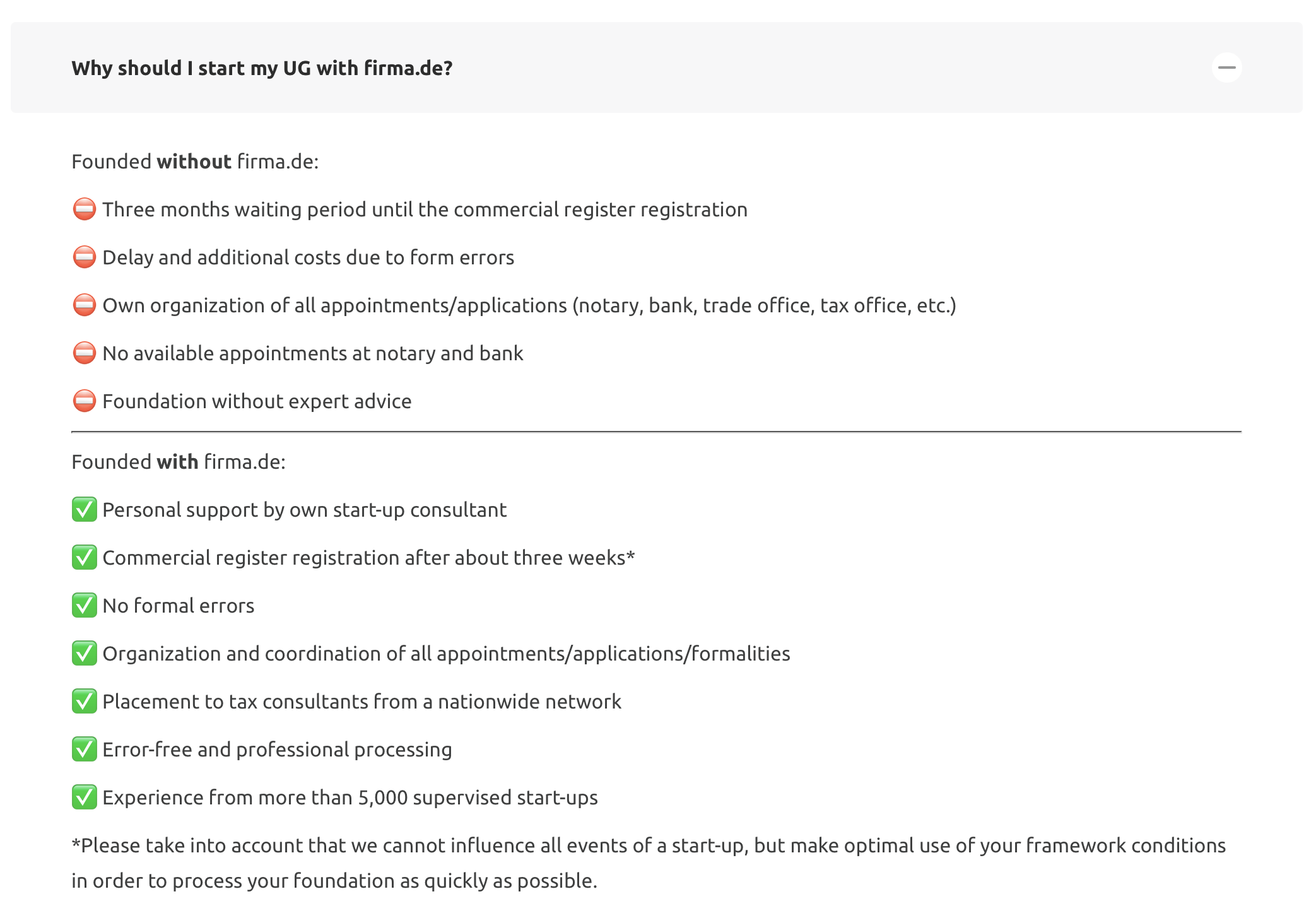
Registering a company in Germany involves multiple steps, filing paperwork with more than one entity, and getting your company foundation certified by a Notary, something that, even in the midst of COVID, was done in person. To make my life easier, I hired a company that helps founders start companies (firma.de).
They were honestly wonderful to work with and helped me all the way; however, it took over a month between when I initiated the official process and when my company was registered, and that’s after paying for the “express” service that gets you appointments faster. The process involved filing paperwork (often mailing physical documents), booking notary appointments, finding a tax consultant, and running some “audits” to make sure I could use the company name I selected.
And that’s the first real hurdle; it takes soooo much time and energy to go through the whole thing, when it should be much easier. But it’s not just the time.
The whole process was tiring because it was confusing. You can’t open a bank account until you register with the notary, but to complete the notary process you need a bank account because you need to deposit your initial capital, so you start with the notary. You open your bank account (sometimes it takes up to 48 hours). After you deposit your capital into the account, you can visit your friendly notary again and complete the registration process (which has a fee, due on the day, and paid in cash btw., cash! Maybe that has changed now, but still in 2023 it was cash).
There’s good news on this front, though: the EU is coming up with EU Inc to directly solve this problem, so I’m really looking forward to seeing that realized.


So now your company is up and running; the next step is to register with the tax office and start reporting those sweet taxes.
Tax consultants
Finding a tax consultant in Germany who handles small businesses is hard, and prices are crazy, but not hiring one is even crazier once you start digging into what self-reporting would mean.
So there you go, spamming emails trying to hire one, it feels more like cold selling than trying to hire services. There was another hurdle, but that was my fault, not theirs. My German was ok for conversations, but for tax discussions it wasn’t good enough, so I needed someone who could communicate with me in English, even if all the final paperwork and official communication would be done in German.
Fine, I ended up hiring a company that specialized in small companies and had friendlier pricing for startups, with a caveat that I later found out. The package covered invoice processing and monthly, quarterly, and annual reporting; anything else was billed extra at a rate that would put my company in the ground if I asked too many questions.
But I had no other option, because my business was mainly online, with revenue coming from Medium.com, a newsletter on Kit.com, brand deals for my blog at the time, and this tax company didn’t get it. So each revenue stream came with a hefty invoice; every time they had to clarify something with me, they charged me for each email and the time they spent on “investigation”.
So what should have been a €150/month invoice, I got often crap like this:
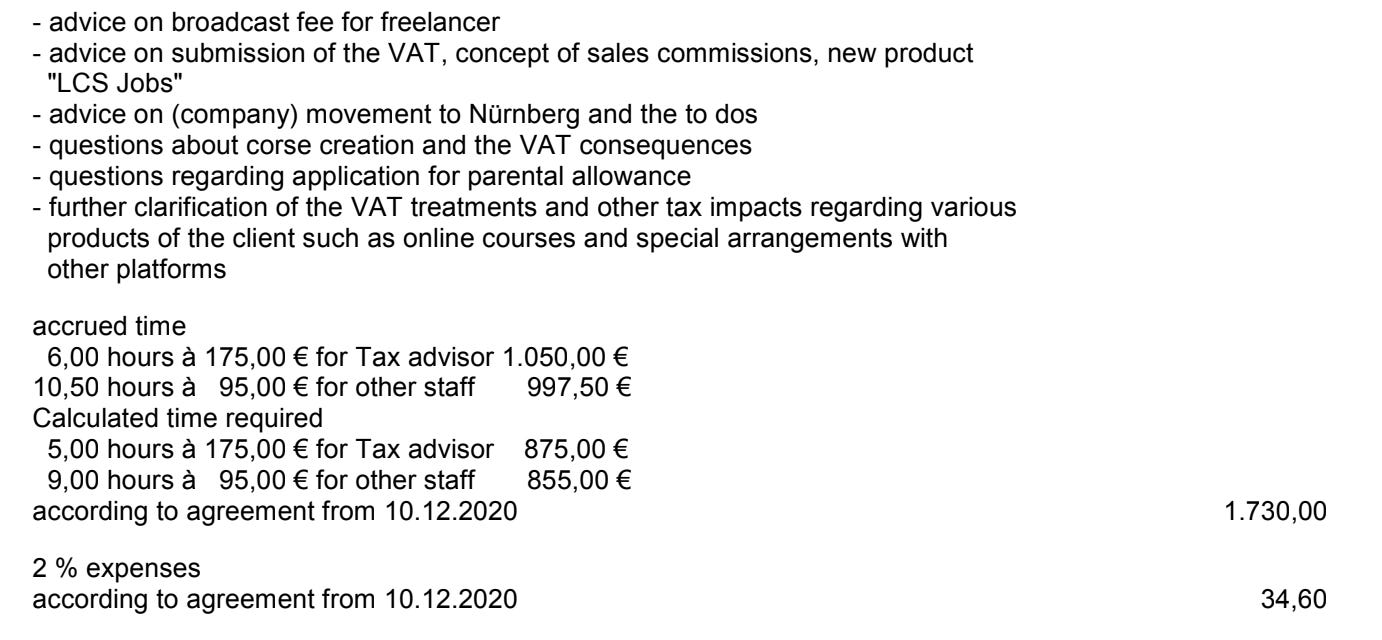
Not always that high, but extra charges were common.
The last straw came when I started building blockchain projects for customers and getting paid in Bitcoin and the like; it was just too much.
Today I work with another firm; it’s better. They understand online businesses much better, but the costs are also much higher, so I do this on the side. My work is with Auth0 and Okta, so I don’t take on customers anymore, and most of my writing is now free to access, so my revenues are quite low right now, but keeping the company alive has substantial costs.
The whole problem originates from taxes being so complicated; with an easier framework and the right tooling, I’m pretty sure I could file them myself, but instead, this is what I have to live with.
Regulations

I’ve already talked about the issues I face with my tax consultant, but there’s also the regulatory side of things, much of which requires expensive consultations with lawyers for things that in the US or other places are much simpler, at least for smaller companies.
It starts simple: you have a website, you need an imprint, a privacy policy, and cookie consent banners, which, if you are brave enough, you can now generate pretty much with AI. But the moment you start dealing with user data things escalate pretty fast. You’ll have to disclose things like:
what personal data you collect and why;
retention/deletion policies;
contracts with cloud processors
analytics platforms
etc.
Doesn’t seem like a big deal, but to do it right, you’ll need counsel, and that’s expensive for a small company. But it’s not just that.
Founders don’t necessarily know whether something requires consent, whether a vendor you picked up from a Claude recommendation is compliant, whether you need a DPIA (which I still don’t know what it is), etc.
It’s the uncertainty created by having so many rules you have to follow in so many different countries, because even in the EU, not all countries are the same. So you need to pay someone to verify all of these for you.
Sometimes you can’t ship your idea, not because you can’t build it, but because your company can’t afford the regulatory costs.


I do think Europe needs to deregulate asap! We need fewer, leaner processes, clearer rules, and systems small companies can follow without notaries and expensive lawyers every time they want to do something slightly different.
But deregulation cannot simply mean getting rid of anything that makes running a company inconvenient.
Perhaps badly implemented, but we shouldn’t forget the essence of some of these regulations. We gotta still protect what makes Europe, Europe.
Privacy and labor culture are an example. The EU recognizes the protection of personal data as a fundamental right. And personally, I like that. I like that a random company can’t simply collect whatever information it wants about me and do whatever it wants with it. I want the right to have my information removed from any company, but what they collected is essentially mine and doesn’t need to linger in some service I don’t use anymore.
I like that there are limits.
But those limits must be a reasonable balance that allows for growth without trampling everyone’s rights.
Hiring and Working with People
One trend I keep seeing in tweets, often from European founders, is the argument that Europeans are lazy, or that they should embrace a working culture like SF, where people work 996 (9 am to 9 pm, 6 days a week), which upsets me for multiple reasons.

If the only way to create the success these founders need is to make people work more for the same, then they are automatically a failure. Society worked hard for workers’ rights, and we shouldn’t just trample all over them.
Should Europe as a society maybe do more, sure, there’s a lot of room for improvement, other extremes like 824 (from 8 to 2, 4 days a week) are not sustainable either, but we need to strike a balance between the two.
Workers and employees are people, and work is just a means to an end, not the end in itself.
In cities like SF, the incentives for people in tech to do those crazy hours are high, but when they talk about Europe, they still want to pay European salaries. Plenty of people in Europe are willing to put in the hours and do the hard work. Still, they need to be fairly compensated, and yes, if founders want them to live for the company, make them a part of it, give ownership, because just believing in the product isn’t enough.
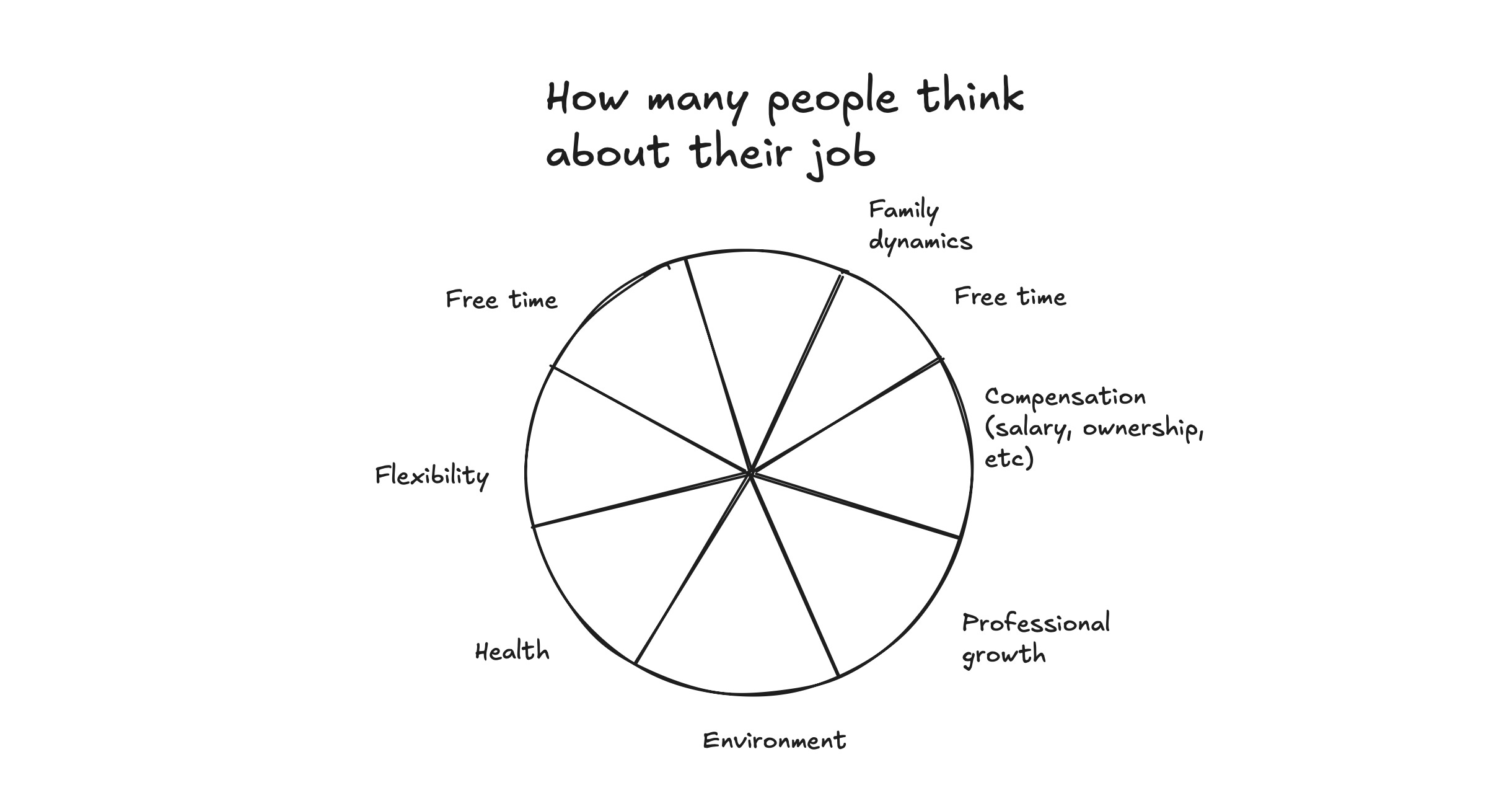
Similarly, we have to work more on the incentives from the regulation, as right now, in many countries, much of the incentive to create more value goes to the government. It’s often better to just work less and earn the same than working more to earn just a bit more, as you’re heavily taxed.
Complaining about people not willing to do 996 or other crazy schedules isn’t the right approach; improving incentives and encouraging people to succeed is.
Make it easier to work. Not easier to exploit work.
Capital and risk
Europeans and Americans have very different mindsets in general; it’s a different culture, and it’s part of what makes cultures rich: diversity in ideas and opinions. And when it comes to finance and financial risks, the two couldn’t be further apart.
The usual criticism is that Europe is too risk-averse.

And there’s some truth about that. Europeans in general are much more financially conservative, and they have a completely different relationship with risk. In the US is normal for people going in debt (for good and bad reasons), but their willingness to take risks and bet it all is part of their culture.
That creates an environment where ideas in general get funded much earlier and with more uncertainty. Because if it goes bust, it is not good, but it’s ok.
Europe could use some of that. It should be easier for someone with good ideas to raise capital. There should be more capital available for riskier bets, at early stages, before the company can prove it can make any money.
That doesn’t mean we need to romanticize risk. For every story about someone who took everything they had, maxed out their credit cards, and built a billion-dollar company, there are dozens or more people for whom that story ends at “maxed out credit cards.” Everyone loves talking about the Elons of the world, but we rarely hear of the ones that failed along the way and never recovered.
Europe has traditionally had a more conservative relationship with debt and personal financial risk. Some of that probably does make us less willing to take the kind of bets required to create giant tech companies.
But some of it is also just... financial responsibility.
I don’t believe Europe should become the US in that regard, but it needs to find a better balance. Europe needs to become more comfortable with risk without becoming reckless.
I don’t want Europe to become Silicon Valley
Europe needs to figure out what a genuine European version of innovation and ambition looks like.
We need Europe to be faster, more willing to take risks, a place that incentivizes innovation and gets people exciting about building new companies. And needs to do all that while being a great place to live, where people can be ambitious and successful at work without work becoming all there is.
I think that version of Europe is possible. And honestly, that’s a much more interesting challenge than simply copying what already exists somewhere else.