

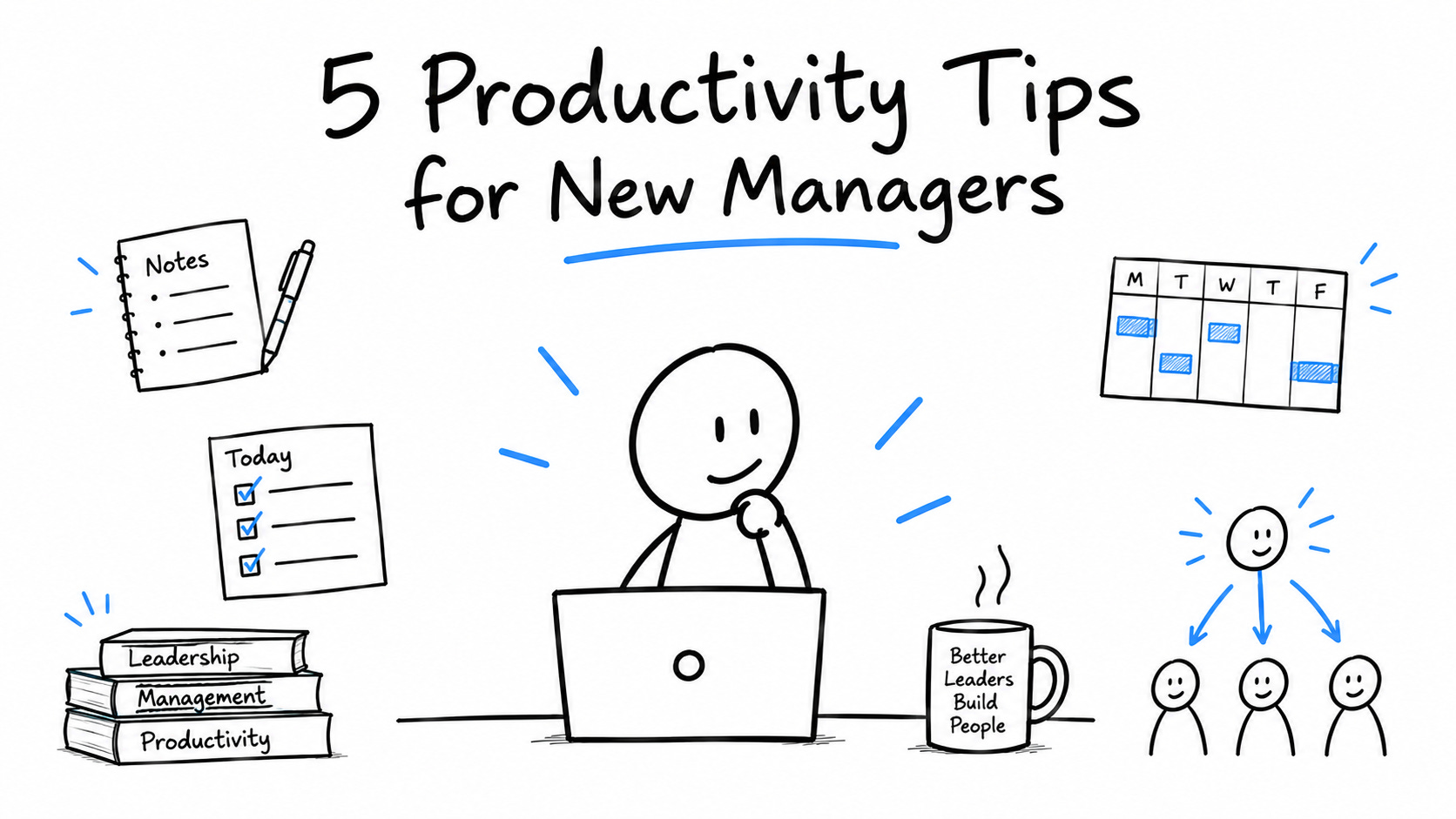
I’ve always been looking to be more productive, not just to produce more and better outcomes, but also because productivity feels great, and when I’m feeling productive, I’m, in general, feeling much better.
But productivity means different things as an IC than as a manager. As a developer, productivity meant having a fantastic developer environment, with NeoVim at the forefront, a customized window manager, so I didn’t have to touch the mouse, and ignoring Slack for as long as I could.
But none of that mattered when I transitioned to management, and I had to figure out from scratch what it meant to be productive as a manager and what the best tools for the job were.
During this time, I consumed so much information around productivity, watching Ali Abdaal and other productivity gurus, reading books on productivity and management, and trial and error. Lots of trial and error.
The problem with all this advice is that it’s really hard to implement if you’re starting. You are new to the job, you are new to productivity from this perspective, and all these people have sophisticated systems they have built over the years. I’m not like that; I needed something much simpler, and these are the things that worked for me.
Take notes with pen and paper
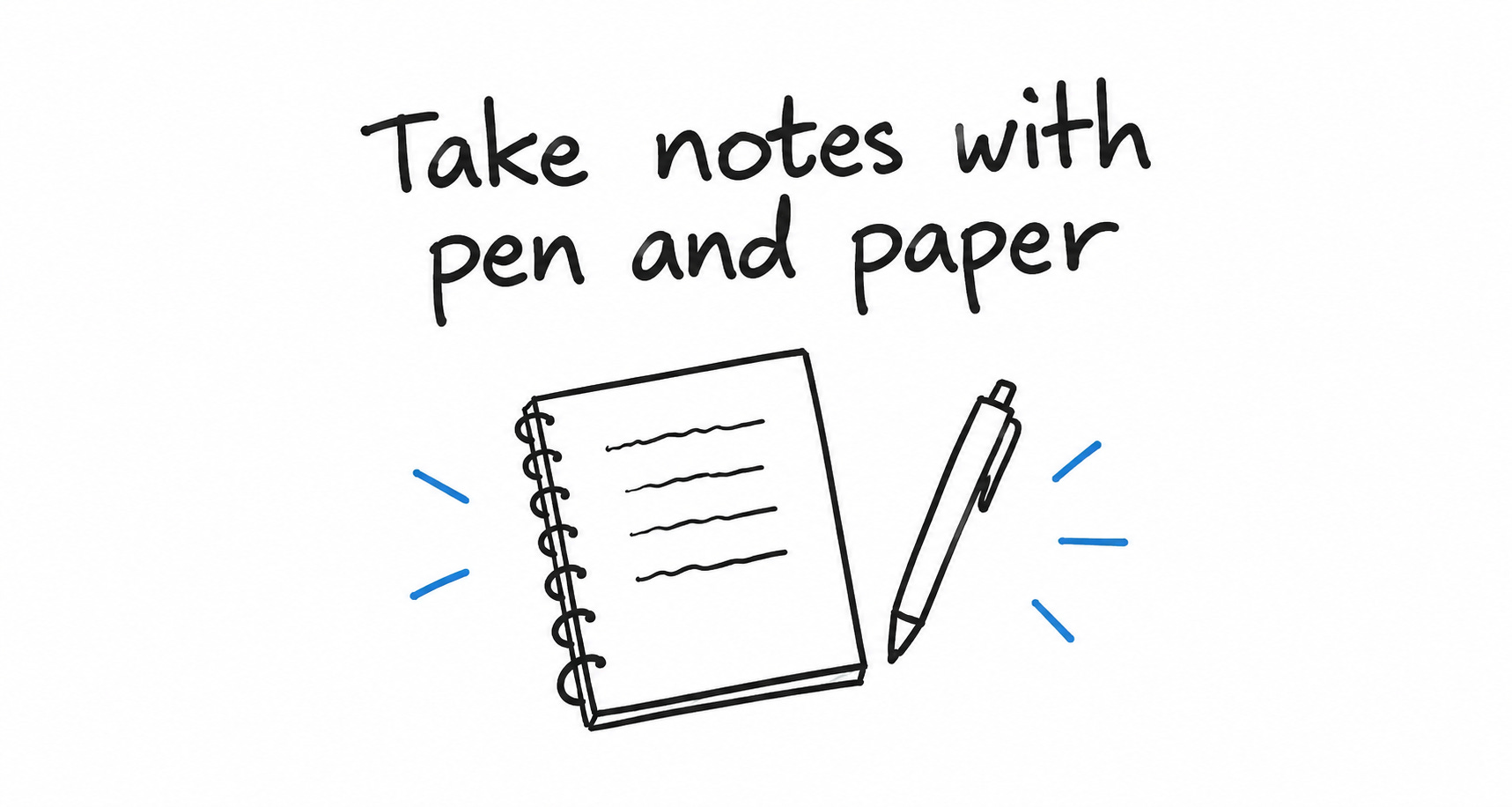
It’s funny I give this advice when I’m someone a year ago I wasn’t sure I even remembered how to write by hand, and not because I never took notes, but because I always did it digitally, with NeoVim, on my Obsidian vault.
But when I started having more meetings, between 1:1s with my team and other calls, I quickly noticed that taking notes digitally made me feel disconnected from the conversation, like either you’re looking at what you are typing, or you’re watching the conversation. I didn’t like that trade-off.
So I bought myself an old-fashioned notebook, a good pen, and made the switch. It was weird but fun; I was faster; I was imprecise, but it didn’t matter. I felt more connected to the conversations, and it felt easier to write things down.
There’s also some satisfaction in seeing the progress on paper; it feels like I amounted to something, maybe it’s just silly, but it did really help.
But paper has an issue: it’s not searchable. When I had everything in Markdown, I could easily search for anything, all the talking points I had with anyone, or notes on any topics; everything was searchable and organized. With paper, that was harder.
And that’s where AI has been fantastic. I still write everything on paper, but after each call or at the end of the day, I snap a photo of my notes and ask AI to save and organize them in my notes vault.
And that solved the problem. I get the best of both worlds: the analog and the digital.

Task management and prioritization
In this area, I already had an advantage as I was already running my personal life with my calendar and my ToDo list. When it came to work, there was always a tool to track my work, either a beloved Jira ticket or a row in Airtable. In any way, it was easier for me to keep track of things because they were organized, or there were only a few I had to worry about.
But when I became a manager, that list of things to take care of grew, from the number of answers to questions, reports, and infinite asks.
At first, it was a bit overwhelming to focus on what needed to be done while trying to stay on top of everything. And I failed at that. I forgot things, missed deadlines, and completely dropped the ball on some stuff. No bueno!
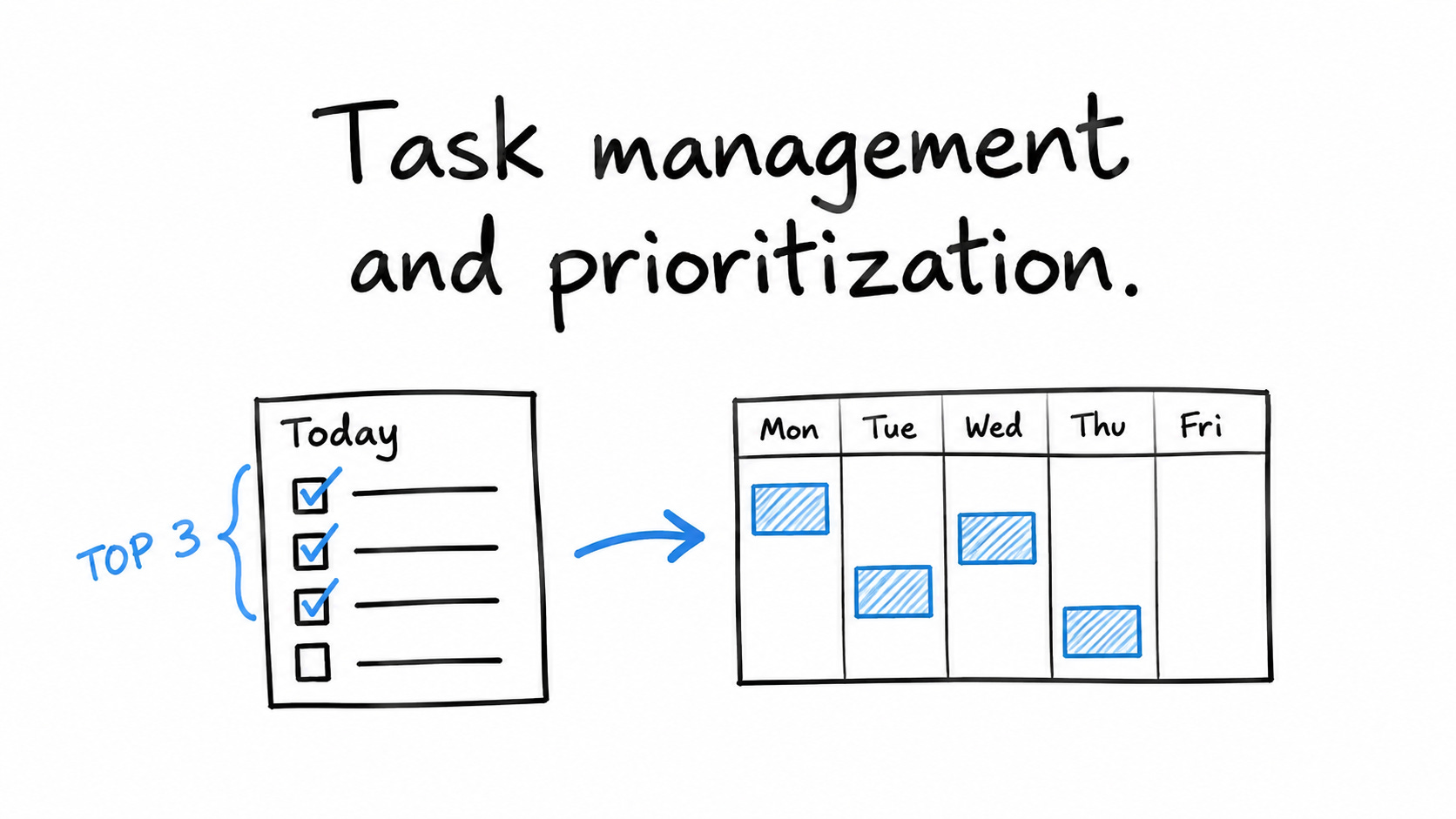
So now I’m using the same system I had for my personal life for work. I run everything through the calendar, with blocks for dedicated work and a ToDo list that tracks all my open items and follow-ups.
Every day I follow the same routine: I start my morning with some reading, then jump into organizing the day. I don’t need to plan for everything, as there are always things happening during the day, but I like to have at the very minimum 3 priorities for the day: the things that I need to complete before I close down, and I take those seriously.
But how do I organize it all? First, I ask Claude to summarize what happened since I disconnected the day before, which, because I work EU time on an American company, means a lot happens when I’m off. That summary gives a high-level view and immediately flags any mentions or action items for my team or me. Anything I deem an action goes into my ToDo list.
Then I go through my Slack notifications; sometimes I see things Claude missed (private channels), and I add them to my ToDo list.
After everything is saved, I revise my ToDo list and organize things with tags; tags reflect people, topics, or projects. Once everything is organized, I pick the 3 priorities for that day, the things that I must complete to consider I had a productive day.
After I have that, I switch my generic time blocks, things like “Focus time,” to the actual tasks, because nothing would be a priority on my day if it’s not in my calendar. After that, depending on how full the day looks, I may add a few more things to do.
Then I go through the day following my calendar notifications for meetings and focus time.

Weekly review
As I mentioned at the start, not all things I tried worked out well, and some things were obvious fails, but most of them kinda worked, but not really. I probably would’ve been fine with how they were, but taking time to reflect on my week convinced me I could do better.
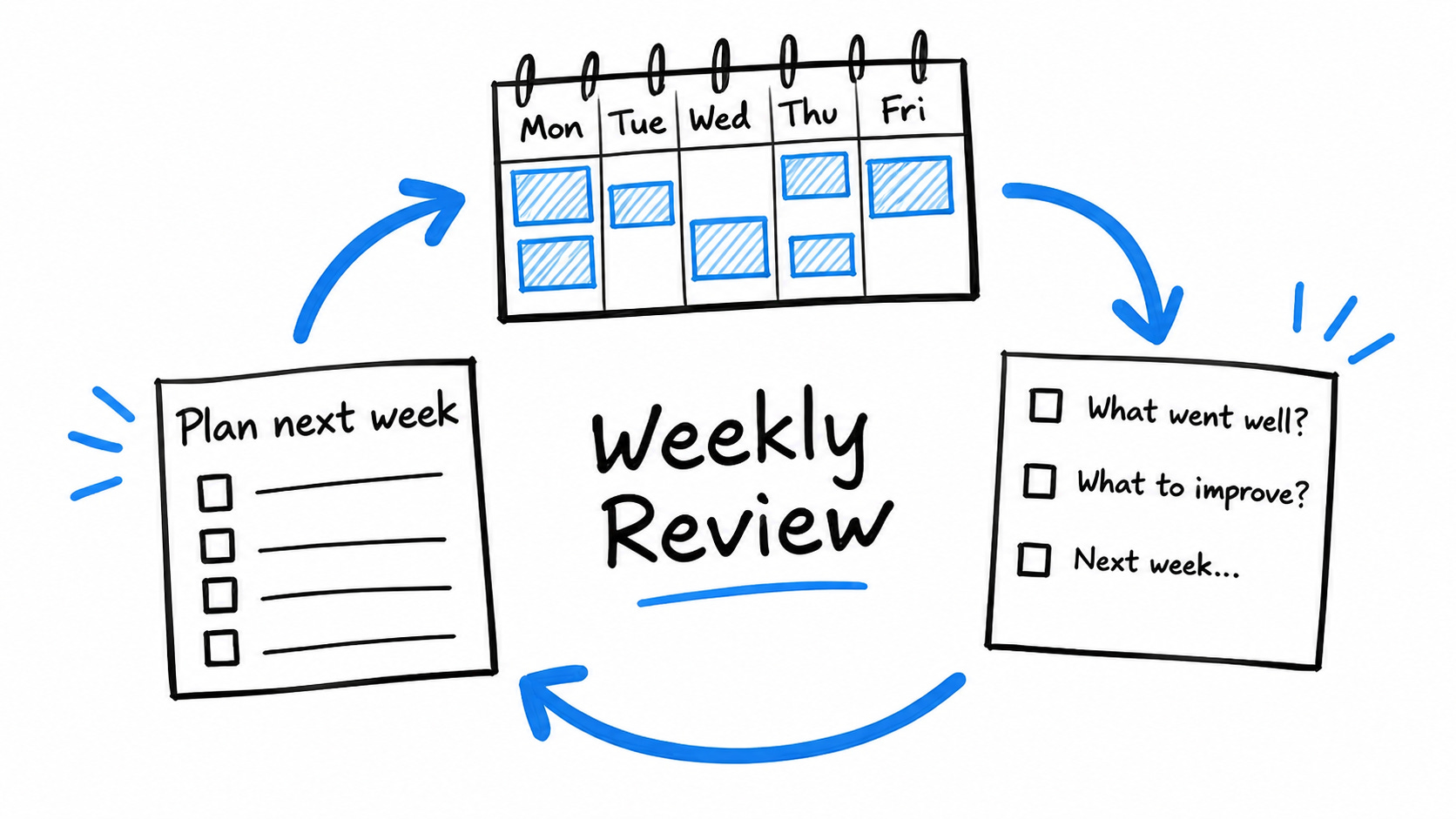
And that’s the value of the weekly review: it’s a 30-minute time block (I like to keep it short) where I think about how the week went, what I could have done differently, and what’s going well.
During this time, I try to zoom out from the day-to-day and think about long-term priorities, upcoming projects, ideas, and also clean up tasks and prepare for the week ahead.
I do like to take notes during the weekly, and I typically follow a specific structure. I take digital notes because I’m always at my laptop when I’m doing this, and I’m alone, sometimes with Music, and digital work.
Here’s the template I like using for myself; it’s based on one of Ali Abdaal’s videos, but I changed it a bit for my own needs:
## 🛣️ Weekly Review Template

---

### 🔁 Rewind

- What were last week’s **Top 3 Priorities**?

- How did they go?

---

### 🎯 Reflect

- **Wins**:

- **Challenges**:

- **Adjustments**:

---

### 🧭 Recalibrate

- What are my **Top 3 Priorities** for this upcoming week?

1. …

2. …

3. …

[] Are they reflected in my calendar?

---

### 🧹 Reset

[] **Inbox Zero**: Have I cleared my email, messages, and open loops?

[] **Projects & To-Dos**: Have I updated my lists?

[] **Calendar**: Is next week realistically planned?
At the end, I almost always record a short audio message for myself, limiting it only to positive things, and I keep those, just in case I guess. I never listen to them again, but who knows, maybe one day I’ll.
Read about leadership every week
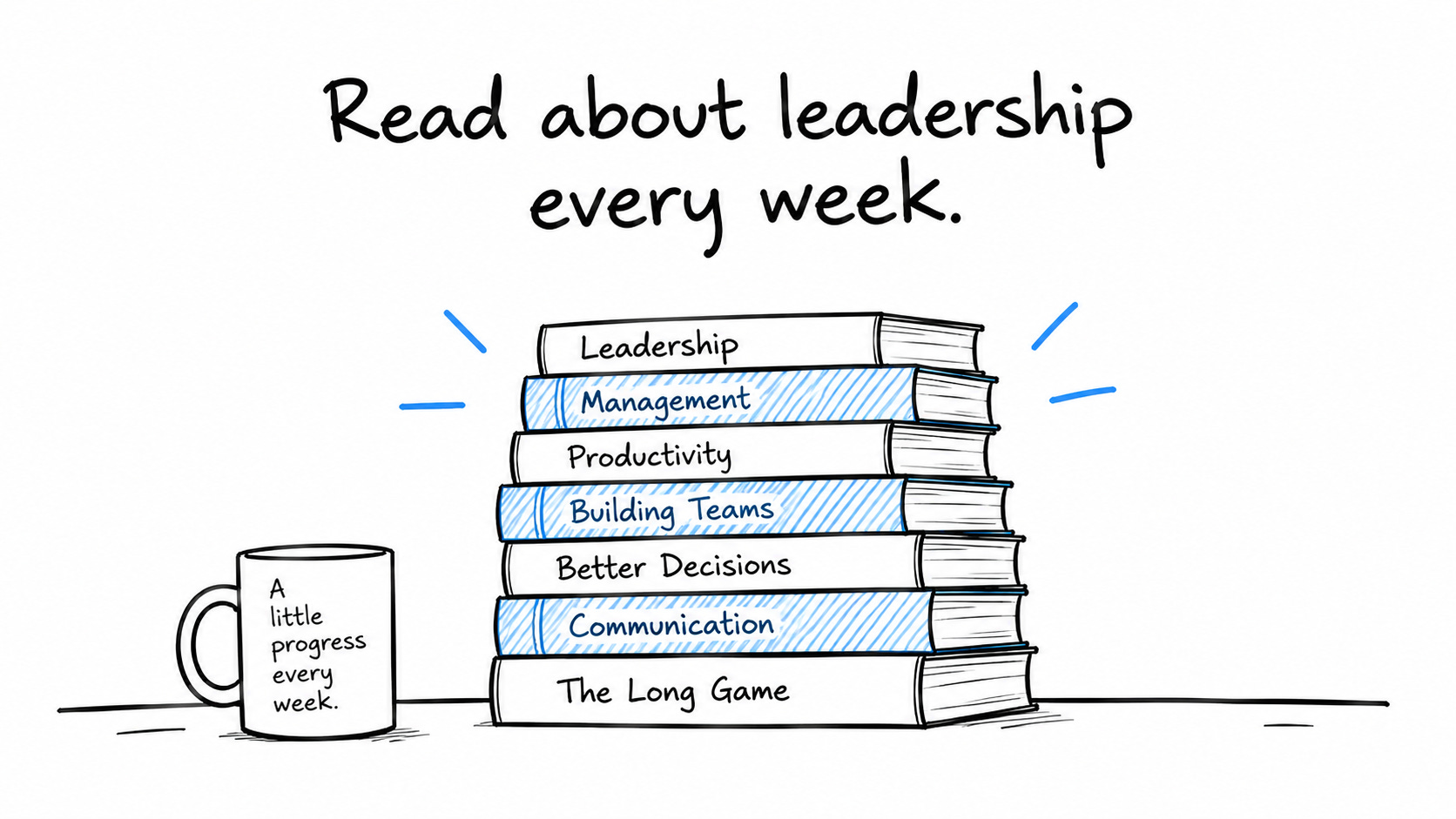
Learning from your own mistakes is great, but it’s even greater to learn from other people’s mistakes, and the best way to do that is by reading.
I don’t care whether you prefer books or articles; read at least ONE chapter or ONE article a week about management, leadership, productivity, or anything else that will help your career grow. Just be wary of overdoing it, not everything you consume needs to be about the same thing.
You’re already reading this article; that’s great! You’re already doing better than most people. Think about it: just ONE new thing you learn every week, it’s 50 new perspectives you’ll process in a year. That’s gold, and the effects are compounding.
A bit every week > 3 books in a week and not reading again for 3 months.
The key is consistency, and most importantly, reflect and apply the ideas you learn on your own; that’s how you capitalize on your reads.
Don’t fall for the “I should just do it myself” trap
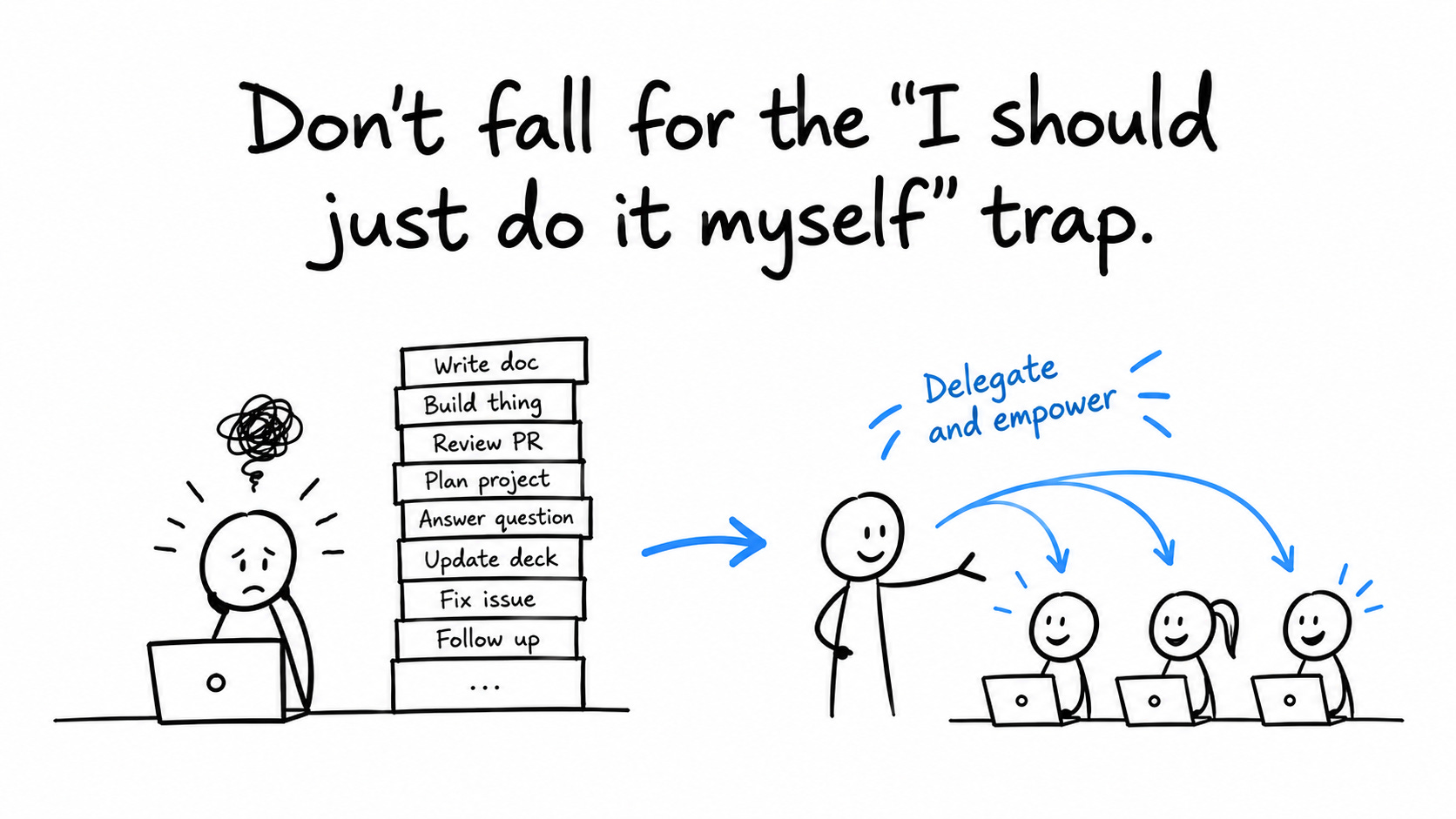
A big one for anyone acting as a manager for the first time is letting go of the idea that you could do it better or faster yourself. Perhaps you can; I don’t doubt that. A lot of us were promoted to management after being excellent ICs, but what made you an excellent IC isn’t the same skill set that will make you a great manager.
So I know it is tempting, and that we sometimes feel we know better, but give your team the chance to do the work for themselves. I’ve fallen for this myself. On one of my first projects as a manager, I came in with my mind already fixed on what had to be done, and when others shared their point of view, I found myself pushing my ideas because I thought they were the better way.
Because I had read about this before, at some point in the call I reasoned and let it be, trusting another proposal; I shared some feedback, sure, but I stopped pushing my own way. I was afraid; I was responsible for something I wasn’t directly doing.
But I was positively surprised. The work got done well, and I learned that lesson firsthand. Not because it wasn’t done my way; it was done the wrong way.
Imagine that for a second: if I’d ended up doing the IC work, I’d have alienated my team and perhaps even failed to deliver, not only on the task, but on my results as a manager, breaking the team’s trust and failing to deliver on the team’s goals.
So don’t fall for that trap, trust your team, and help them get the work done. Give your opinion, as an opinion, not as the only way to solve the problem.
Final thoughts
None of what I shared with you today is sophisticated; on the contrary, it’s quite simple, and that’s the point. When I started managing people, I wasn’t sure what I was doing. When I tried to follow other productivity advice, it only added more confusion by pushing me to adopt advanced productivity systems that I’m sure are amazing, but that I couldn’t take on while learning how to manage.
My last piece of advice, I guess, is don’t just copy what I do; take what you think would benefit you, try it out, and see what sticks.
If I have to be honest, I still miss how productivity felt as a developer; everything was much clearer. I was happy when code worked, when my PR got merged, when I was faster with NeoVim, etc. Now, some days I check my three priorities, but I still wonder if I made any progress at all.
But not everything is bad; being a manager increased my potential. Now I’m not just limited to what I can produce, but to what my team and I can do, and that’s very powerful. It’s not about what I did, but about what I could enable others to do, and that’s amazing.
Thanks for reading!